
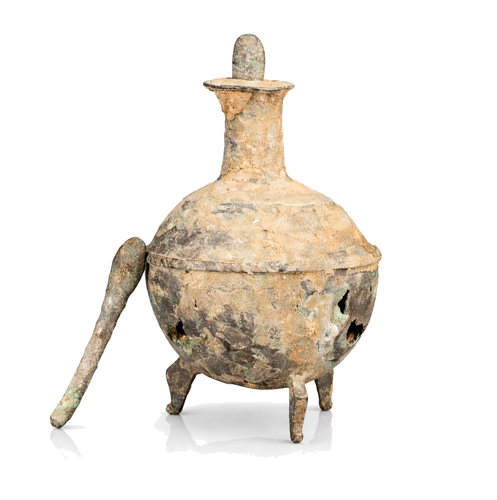
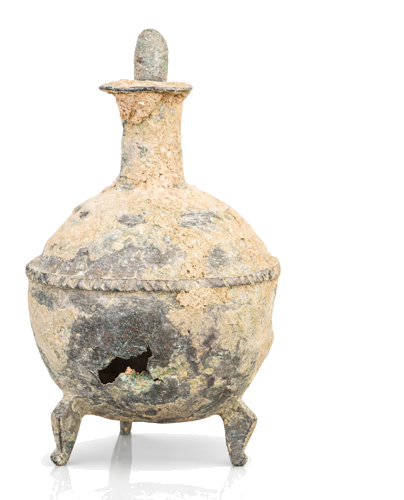
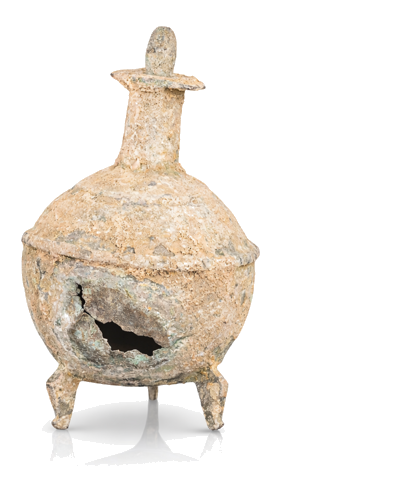
About the item: This bronze kohl jar with applicator is an authentic artifact from the Bactria region, dating to the 2nd–1st millennium BC. It is a specialized cosmetic implement designed for the storage and dispensing of kohl—a finely ground pigment made from galena or soot used for eye makeup and protection. The object represents the domestic culture, hygiene habits, and aesthetic concepts of the Bronze and early Iron Age populations of Central Asia.
Technical Information:
Object: Bronze kohl jar (cosmetic vessel) with applicator
Culture / Period: Bactria, Central Asia (c. 2nd–1st millennium BC)
Materials: Bronze (copper alloy)
Technique: Bronze casting, hammering, surface polishing
Dimensions: 8 × 5 × 5 cm
Construction: Two-part set – a globular vessel set on three feet and a separate long applicator (rod)
Condition: Very good; the original structure of the body is preserved, featuring a strong natural oxidative patina and characteristic encrustations of soil and mineral deposits
Provenance: Private European collection (acquired in 2020); formerly in old UK and European collections formed since the 1970s (acquired from the UK antique market in 1990)
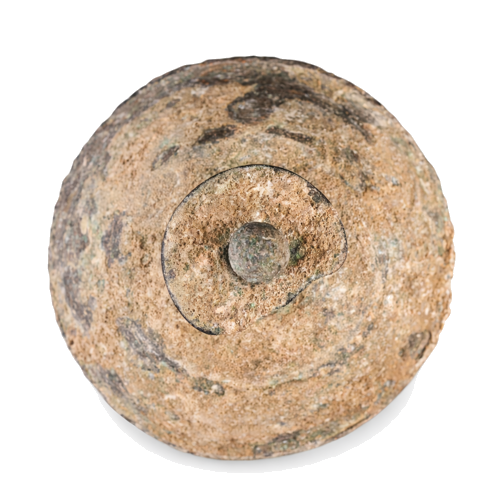
Artistic and Structural Analysis: The vessel features a functional, globular form that ensures interior volume, while the three short feet provide stability on a horizontal surface. The design is distinguished by a tall, chimney-like neck with an everted rim, shaped for the convenient insertion of the applicator. A raised relief band encircling the mid-section serves as both a decorative element and a structural reinforcement. The included original bronze applicator is tapered, allowing for the precise dosage of cosmetic substances.
Historical and Geographical Context: In antiquity, the Bactria region was a significant cultural and commercial hub. The use of kohl in this region served both aesthetic and practical purposes: metal sulfide-based powders protected the eyes from intense solar glare, insect-borne infections, and carried a ritualistic-protective function. Such vessels demonstrate the high level of bronze-working proficiency and the sophisticated culture of personal hygiene within the society of that era.
Collectible and Museum Value: Historical Value: A rare surviving complete set (vessel together with applicator) from the Bactrian period. Collectible Appeal: The compact size, clear provenance, and authentic, uncleaned surface patina are primary factors increasing the object's market demand. Museum Potential: Suitable for thematic exhibitions focusing on Ancient Near Eastern and Central Asian metalwork and the history of daily life; meets high standards for museum display and identification. Legal Status: Collectible object, legal trade within the EU territory.